Graph Sketching and Recognition
The following practice questions test your understanding of the graphical description of motion. Use the Show Answer! button to view answers and explanations. Further information is available on-line at The Physics Classroom Tutorial.
NOTE to the Student:
There is a lot of information on this page. It is suggested that you first read the questions and make efforts to answer all the questions before peeking at the answers. Once you've answered all the questions, then check your answers. Physics is learned most effectively when your mind is actively engaged in the processes of analyzing and predicting. Avoid treating the information on this page as factual information to be dumped inside of a mental receptacle. Avoid merely looking at the answers; take the time to study the logic of the answers. If still unclear, consider online help at The Physics Classroom Tutorial or see your teacher for further assistance.
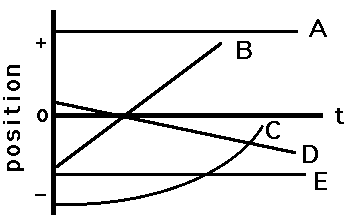
Use the following graph to answer Questions #1 - #7.
1. Which object(s) is(are) maintaining a state of motion (i.e., maintaining a constant velocity)?
Show answer!
Objects A, B, D, and E.
Objects A, B, D, and E are maintaining a state of motion (i.e., remaining with constant velocity) as demonstrated by the constant slope. If the slope is constant, then the velocity is constant.
2. Which object(s) is(are) accelerating?
Show answer!
Object C
Object C is accelerating. An accelerating object has a changing velocity. Since the slope of a p-t graph equals the velocity, an accelerating object is represented by a changing slope.
3. Which object(s) is(are) not moving?
Show answer!
Objects A and E.
Objects A and E are not moving. An object which is not moving has a zero velocity; this translates into a line with zero slope on a p-t graph.
4. Which object(s) change(s) its direction?
Show answer!
None of the objects change direction.
None of these objects change direction. An object changes its direction if it changes from a + to a - velocity (or vice versa). This translates into a p-t graph with a + slope and then a - slope (or vice versa).
5. On average, which object is traveling fastest?
Show answer!
Object B.
Object B is traveling fastest. To be traveling fastest is to have the greatest speed (or greatest magnitude of velocity). This translates into the line on a p-t graph with the greatest slope.
6. On average, which moving object is traveling slowest?
Show answer!
Object D.
Object D is traveling slowest. To be traveling slowest is to have the smallest speed (or smallest magnitude of velocity). This translates into the line on a p-t graph with the smallest slope.
7. Which object has the greatest acceleration?
Show answer!
Object C.
Object C has the greatest acceleration. It is the only object with an acceleration. Accelerated motion on a p-t graph is represented by a curved line.
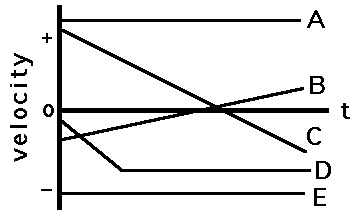
Use the following graph to answer Questions #8 - #13.
8. Which object(s) is(are) maintaining its state of motion?
Show answer!
Objects A and E.
Objects A and E are maintaining their state of motion. To maintain the state of motion is to keep a constant velocity (i.e., to have a zero acceleration). This translates into a zero slope on a v-t graph.
9. Which object(s) is(are) accelerating?
Show answer!
Objects B and C (and D during the first part of its motion).
Objects B and C are accelerating (and for a while, object D). Accelerated motion is indicated by a sloped line on a v-t graph.
10. Which object(s) is(are) not moving?
Show answer!
Each of the objects are moving.
Each of the objects are moving. If an object were not moving, then the v-t graph would be a horizontal line along the axis (v = 0 m/s).
11. Which object(s) change(s) its direction?
Show answer!
Objects B and C.
Objects B and C change their direction. An object that is changing its direction is changing from a + to a - velocity. Thus, the line on a v-t graph will pass from the + to the - region of the graph. Object D is not changing its direction; object D first moves in the - direction with increasing speed and then maintains a constant speed.
12. Which accelerating object has the smallest acceleration?
Show answer!
Object B.
Object B has the smallest acceleration. Acceleration is indicated by the slope of the line. The object with the smallest acceleration is the object with the smallest slope.
13. Which object has the greatest velocity?
Show answer!
Object A (E is a close second place).
Object A has the greatest velocity (and object E is a "close second"). The velocity is indicated by how far above or how far below the axis the line is. Object A has a large + velocity. Object E has a large (but not as large) - velocity.
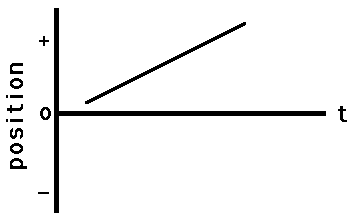
14. Sketch a position-time graph for an object which is moving with a constant, positive velocity.
Show answer!
A position-time graph for an object which is moving with a constant, positive velocity is shown below. A positive, constant velocity is represented by a line with constant slope (straight) and positive slope (upwards sloping).
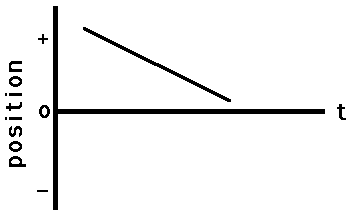
15. Sketch a position-time graph for an object which is moving with a constant, negative velocity.
Show answer!
A position-time graph for an object which is moving with a constant, negative velocity is shown below. A negative, constant velocity is represented by a line with constant slope (straight) and negative slope (downwards sloping).
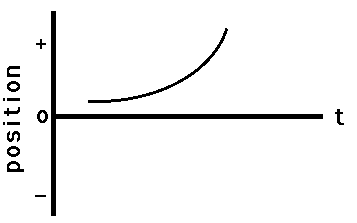
16. Sketch a position-time graph for an object moving in the + dir'n and accelerating from a low velocity to a high velocity.
Show answer!
A position-time graph for an object moving in the + dir'n and accelerating from a low velocity to a high velocity is shown below. If the object is moving in the + dir'n, then the slope of a p-t graph would be +. If the object is changing velocity from small to large values, then the slope must change from small slope to large slope.
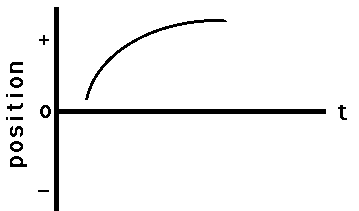
17. Sketch a position-time graph for an object moving in the + dir'n and accelerating from a high velocity to a low velocity.
Show answer!
A position-time graph for an object moving in the + dir'n and accelerating from a high velocity to a low velocity is shown below. If the object is moving in the + dir'n, then the slope of a p-t graph would be +. If the object is changing velocity from high to low values, then the slope must change from high slope to low slope.
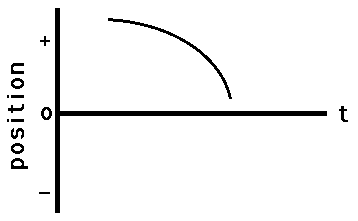
18. Sketch a position-time graph for an object moving in the - dir'n and accelerating from a high velocity to a low velocity.
Show answer!
A position-time graph for an object moving in the - dir'n and accelerating from a high velocity to a low velocity is shown below. If the object is moving in the - dir'n, then the slope of a p-t graph would be -. If the object is changing velocity from high to low values, then the slope must change from high slope to low slope.
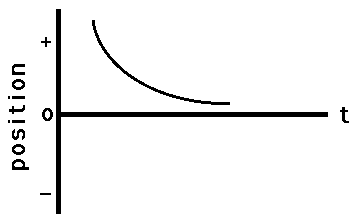
19. Sketch a position-time graph for an object moving in the - dir'n and accelerating from a low velocity to a high velocity.
Show answer!
A position-time graph for an object moving in the - dir'n and accelerating from a low velocity to a high velocity is shown below. If the object is moving in the - dir'n, then the slope of a p-t graph would be -. If the object is changing velocity from low to high values, then the slope must change from low slope to high slope.
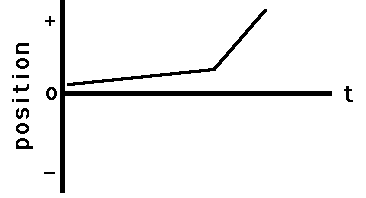
20. Sketch a position-time graph for an object moving in the + dir'n with constant speed; first a slow constant speed and then a fast constant speed.
Show answer!
A position-time graph for an object moving in the + dir'n with constant speed; first a slow constant speed and then a fast constant speed is shown below. If an object is moving in the + dir'n, then the slope of the line on a p-t graph would be +. At first, the line has a small slope (corresponding to a small velocity) and then the line has a large slope (corresponding to a large velocity).
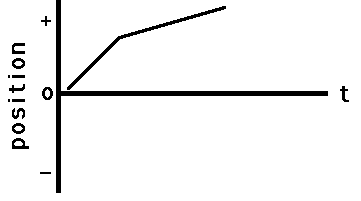
21. Sketch a position-time graph for an object moving in the + dir'n with constant speed; first a fast constant speed and then a slow constant speed.
Show answer!
A position-time graph for an object moving in the + dir'n with constant speed; first a fast constant speed and then a slow constant speed is shown below. If an object is moving in the + dir'n, then the slope of the line on a p-t graph would be +. At first, the line has a large slope (corresponding to a large velocity) and then the line has a small slope (corresponding to a small velocity).
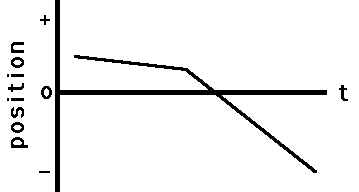
22. Sketch a position-time graph for an object moving in the - dir'n with constant speed; first a slow constant speed and then a fast constant speed.
Show answer!
A position-time graph for an object moving in the - dir'n with constant speed; first a slow constant speed and then a fast constant speed is shown below. If an object is moving in the - dir'n, then the slope of the line on a p-t graph would be -. At first, the line has a small slope (corresponding to a small velocity) and then the line has a large slope (corresponding to a large velocity).
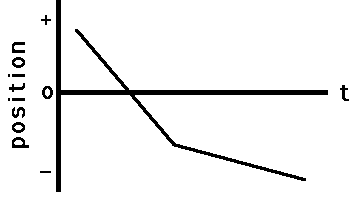
23. Sketch a position-time graph for an object moving in the - dir'n with constant speed; first a fast constant speed and then a slow constant speed.
Show answer!
A position-time graph for an object moving in the - dir'n with constant speed; first a fast constant speed and then a slow constant speed is shown below. If an object is moving in the - dir'n, then the slope of the line on a p-t graph would be -. At first, the line has a large slope (corresponding to a large velocity) and then the line has a small slope (corresponding to a small velocity).
24. Sketch a position-time graph for an object which moves in the + direction at a slow constant speed and then in a - direction at a fast constant speed.
Show answer!
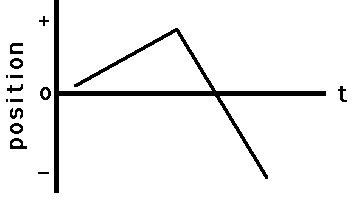
A position-time graph for an object which moves in the + direction at a slow constant speed and then in a - direction at a fast constant speed is shown below. The object must first have a + slope (corresponding to its + velocity) then it must have a - slope (corresponding to its - velocity). Initially, the slope is small (corresponding to a small velocity) and then the slope is large (corresponding to a large velocity).
25. Sketch a position-time graph for an object which moves in the + direction at a fast constant speed and then in a - direction at a slow constant speed.
Show answer!
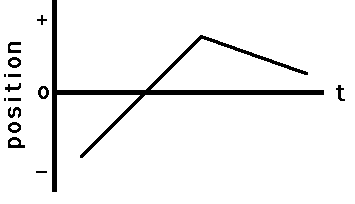
A position-time graph for an object which moves in the + direction at a fast constant speed and then in a - direction at a slow constant speed is shown below. The object must first have a + slope (corresponding to its + velocity) then it must have a - slope (corresponding to its - velocity). Initially, the slope is large (corresponding to a large velocity) and then the slope is small (corresponding to a small velocity).
26. Sketch a position-time graph for an object which moves in the - direction at a slow constant speed and then in a + direction at a fast constant speed.
Show answer!
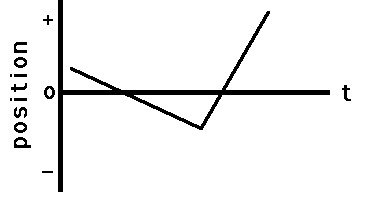
A position-time graph for an object which moves in the - direction at a slow constant speed and then in a + direction at a fast constant speed is shown below. The object must first have a - slope (corresponding to its - velocity) then it must have a + slope (corresponding to its + velocity). Initially, the slope is small (corresponding to a small velocity) and then the slope is large (corresponding to a large velocity).
27. Sketch a velocity-time graph for an object moving with a constant speed in the positive direction.
Show answer!
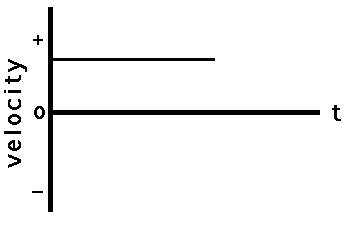
A velocity-time graph for an object moving with a constant speed in the positive direction is shown below. To have "a constant speed in the positive direction" is to have a + velocity which is unchanging. Thus, the line on the graph will be in the + region of the graph (above 0). Since the velocity is unchanging, the line is horizontal. Since the slope of a line on a v-t graph is the object's acceleration, a horizontal line (zero slope) on a v-t graph is characteristic of a motion with zeo acceleration (constant velocity).
28. Sketch a velocity-time graph for an object moving with a constant speed in the negative direction.
Show answer!
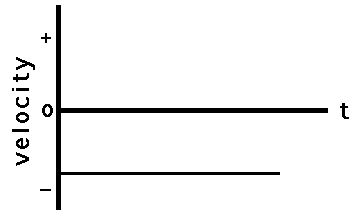
A velocity-time graph for an object moving with a constant speed in the negative direction is shown below. To have "a constant speed in the negative direction" is to have a - velocity which is unchanging. Thus, the line on the graph will be in the - region of the graph (below 0). Since the velocity is unchanging, the line is horizontal. Since the slope of a line on a v-t graph is the object's acceleration, a horizontal line (zero slope) on a v-t graph is characteristic of a motion with zeo acceleration (constant velocity).
29. Sketch a velocity-time graph for an object which is at rest.
Show answer!
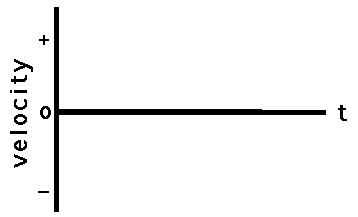
A velocity-time graph for an object which is at rest is shown below. To be "at rest" is to have a zero velocity. Thus the line is drawn along the axis (v=0).
30. Sketch a velocity-time graph for an object moving in the + direction, accelerating from a slow speed to a fast speed.
Show answer!
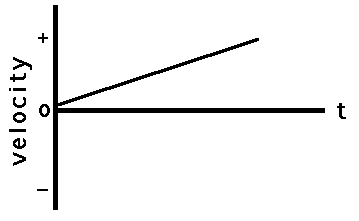
A velocity-time graph for an object moving in the + direction, accelerating from a slow speed to a fast speed is shown below. An object which is moving in the + direction and speeding up (slow to fast) has a + acceleration. (If necessary, review
the dir'n of the acceleration vector in the Physics Classroom Tutorial.) Since the slope of a line on a v-t graph is the object's acceleration, an object with + acceleration is represented by a line with + slope. Thus, the line is a straight diagonal line with upward (+) slope. Since the velocity is +, the line is plotted in the + region of the v-t graph.
31. Sketch a velocity-time graph for an object moving in the + direction, accelerating from a fast speed to a slow speed.
Show answer!
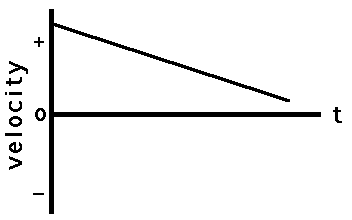
A velocity-time graph for an object moving in the + direction, accelerating from a fast speed to a slow speed is shown below. An object whgich is moving in the + direction and slowing down (fast to slow) has a - acceleration. (If necessary, review
the dir'n of the acceleration vector in the Physics Classroom Tutorial.) Since the slope of a line on a v-t graph is the object's acceleration, an object with - acceleration is represented by a line with - slope. Thus, the line is a straight diagonal line with downward (-) slope. Since the velocity is +, the line is plotted in the + region of the v-t graph.
32. Sketch a velocity-time graph for an object moving in the - direction, accelerating from a slow speed to a fast speed.
Show answer!
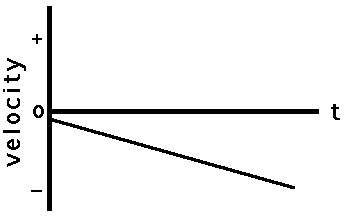
A velocity-time graph for an object moving in the - direction, accelerating from a slow speed to a fast speed is shown below. An object whgich is moving in the - direction and speeding up (slow to fast) has a - acceleration. (If necessary, review
the dir'n of the acceleration vector in the Physics Classroom Tutorial.) Since the slope of a line on a v-t graph is the object's acceleration, an object with - acceleration is represented by a line with - slope. Thus, the line is a straight diagonal line with downward (-) slope. Since the velocity is -, the line is plotted in the - region of the v-t graph.
33. Sketch a velocity-time graph for an object moving in the - direction, accelerating from a fast speed to a slow speed.
Show answer!
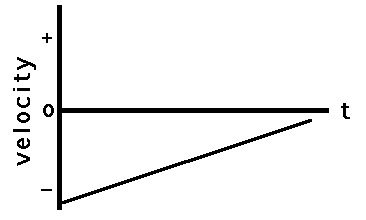
A velocity-time graph for an object moving in the - direction, accelerating from a fast speed to a slow speed is shown below. An object whgich is moving in the - direction and slowing down (fast to slow) has a + acceleration. (If necessary, review
the dir'n of the acceleration vector in the Physics Classroom Tutorial.) Since the slope of a line on a v-t graph is the object's acceleration, an object with + acceleration is represented by a line with + slope. Thus, the line is a straight diagonal line with upward (+) slope. Since the velocity is -, the line is plotted in the - region of the v-t graph.
34. Sketch a velocity-time graph for an object which first moves with a slow, constant speed in the + direction, and then with a fast constant speed in the + direction.
Show answer!
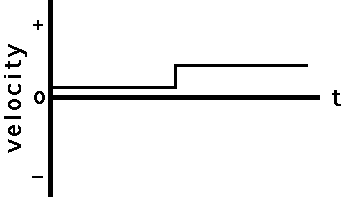
A velocity-time graph for an object which first moves with a slow, constant speed in the + direction, and then with a fast constant speed in the + direction is shown below. Since there are two parts of this object's motion, there will be two distinct parts on the graph. Each part is in the + region of the v-t graph (above 0) since the velocity is +. Each part is horizontal since the velocity during each part is constant (constant velocity means zero acceleration which means zero slope). The second part of the graph will be higher since the velocity is greater during the second part of the motion.
35. Sketch a velocity-time graph for an object which first moves with a fast, constant speed in the + direction, and then with a slow constant speed in the + direction.
Show answer!
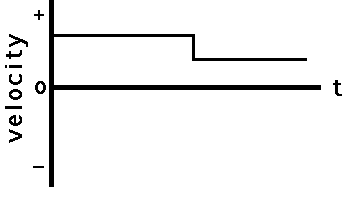
A velocity-time graph for an object which first moves with a fast, constant speed in the + direction, and then with a slow constant speed in the + direction is shown below. Since there are two parts of this object's motion, there will be two distinct parts on the graph. Each part is in the + region of the v-t graph (above 0) since the velocity is +. Each part is horizontal since the velocity during each part is constant (constant velocity means zero acceleration which means zero slope). The first part of the graph will be higher since the velocity is greater during the first part of the motion.
36. Sketch a velocity-time graph for an object which first moves with a constant speed in the + direction, and then moves with a positive acceleration.
Show answer!
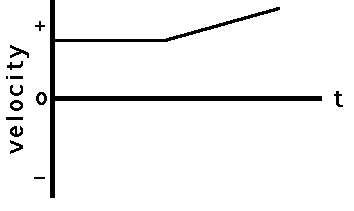
A velocity-time graph for an object which first moves with a constant speed in the + direction, and then moves with a positive acceleration is shown below. Since there are two parts of this object's motion, there will be two distinct parts on the graph. Each part is in the + region of the v-t graph (above 0) since the velocity is +. The slope of the first part is zero since constant velocity means zero acceleration and zero acceleration is represented by a horizontal line on a v-t graph (slope = acceleration for v-t graphs). The second part of the graph is an upward sloping line since the object has + acceleration (again, the slope = acceleration for v-t graphs)
37. Sketch a velocity-time graph for an object which first moves with a constant speed in the + direction, and then moves with a negative acceleration.
Show answer!
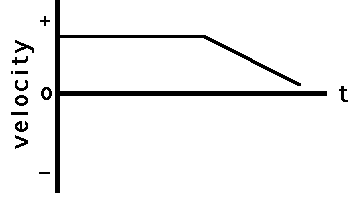
A velocity-time graph for an object which first moves with a constant speed in the + direction, and then moves with a negative acceleration is shown below. Since there are two parts of this object's motion, there will be two distinct parts on the graph. Each part is in the + region of the v-t graph (above 0) since the velocity is +. The slope of the first part is zero since constant velocity means zero acceleration and zero acceleration is represented by a horizontal line on a v-t graph (slope = acceleration for v-t graphs). The second part of the graph is an downward sloping line since the object has - acceleration (again, the slope = acceleration for v-t graphs)