Propagation of an Electromagnetic Wave
Electromagnetic waves are waves which can travel through the vacuum of outer space. Mechanical waves, unlike electromagnetic waves, require the presence of a material medium in order to transport their energy from one location to another. Sound waves are examples of mechanical waves while light waves are examples of electromagnetic waves.
Electromagnetic waves are created by the vibration of an electric charge. This vibration creates a wave which has both an electric and a magnetic component. An electromagnetic wave transports its energy through a vacuum at a speed of 3.00 x 10⁸ m/s (a speed value commonly represented by the symbol c). The propagation of an electromagnetic wave through a material medium occurs at a net speed which is less than 3.00 x 10⁸ m/s. This is depicted in the animation below.
The mechanism of energy transport through a medium involves the absorption and reemission of the wave energy by the atoms of the material. When an electromagnetic wave impinges upon the atoms of a material, the energy of that wave is absorbed. The absorption of energy causes the electrons within the atoms to undergo vibrations. After a short period of vibrational motion, the vibrating electrons create a new electromagnetic wave with the same frequency as the first electromagnetic wave. While these vibrations occur for only a very short time, they delay the motion of the wave through the medium. Once the energy of the electromagnetic wave is reemitted by an atom, it travels through a small region of space between atoms. Once it reaches the next atom, the electromagnetic wave is absorbed, transformed into electron vibrations and then reemitted as an electromagnetic wave. While the electromagnetic wave will travel at a speed of c (3 x 10⁸ m/s) through the vacuum of interatomic space, the absorption and reemission process causes the net speed of the electromagnetic wave to be less than c. This is observed in the animation below.
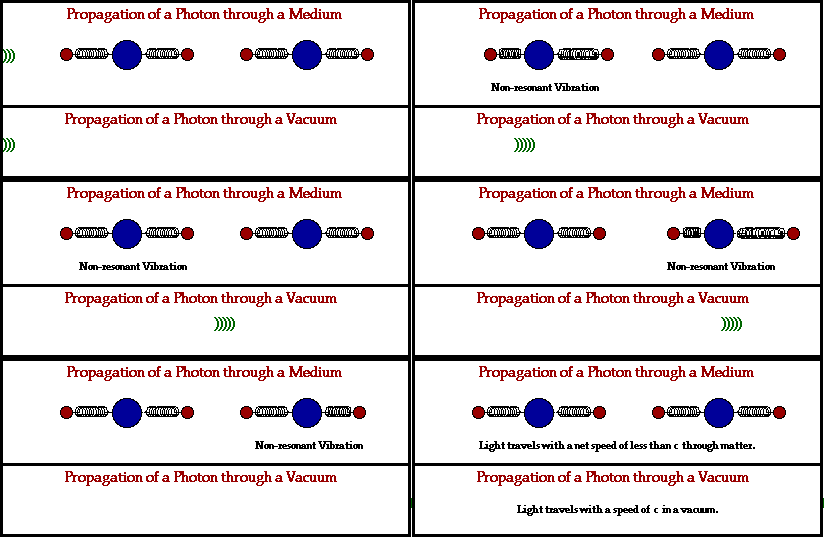
The actual speed of an electromagnetic wave through a material medium is dependent upon the optical density of that medium. Different materials cause a different amount of delay due to the absorption and reemission process. Furthermore, different materials have their atoms more closely packed and thus the amount of distance between atoms is less. These two factors are dependent upon the nature of the material through which the electromagnetic wave is traveling. As a result, the speed of an electromagnetic wave is dependent upon the material through which it is traveling.
For more information on physical descriptions of waves, visit The Physics Classroom Tutorial. Detailed information is available there on the following topics:
Mechanical vs. Electromagnetic Waves
Wavelike Behaviors of Light
The EM and Visible Spectra
Light Absorption, Reflection, and Transmission
Optical Density and Light Speed
Return to List of Animations